Share article

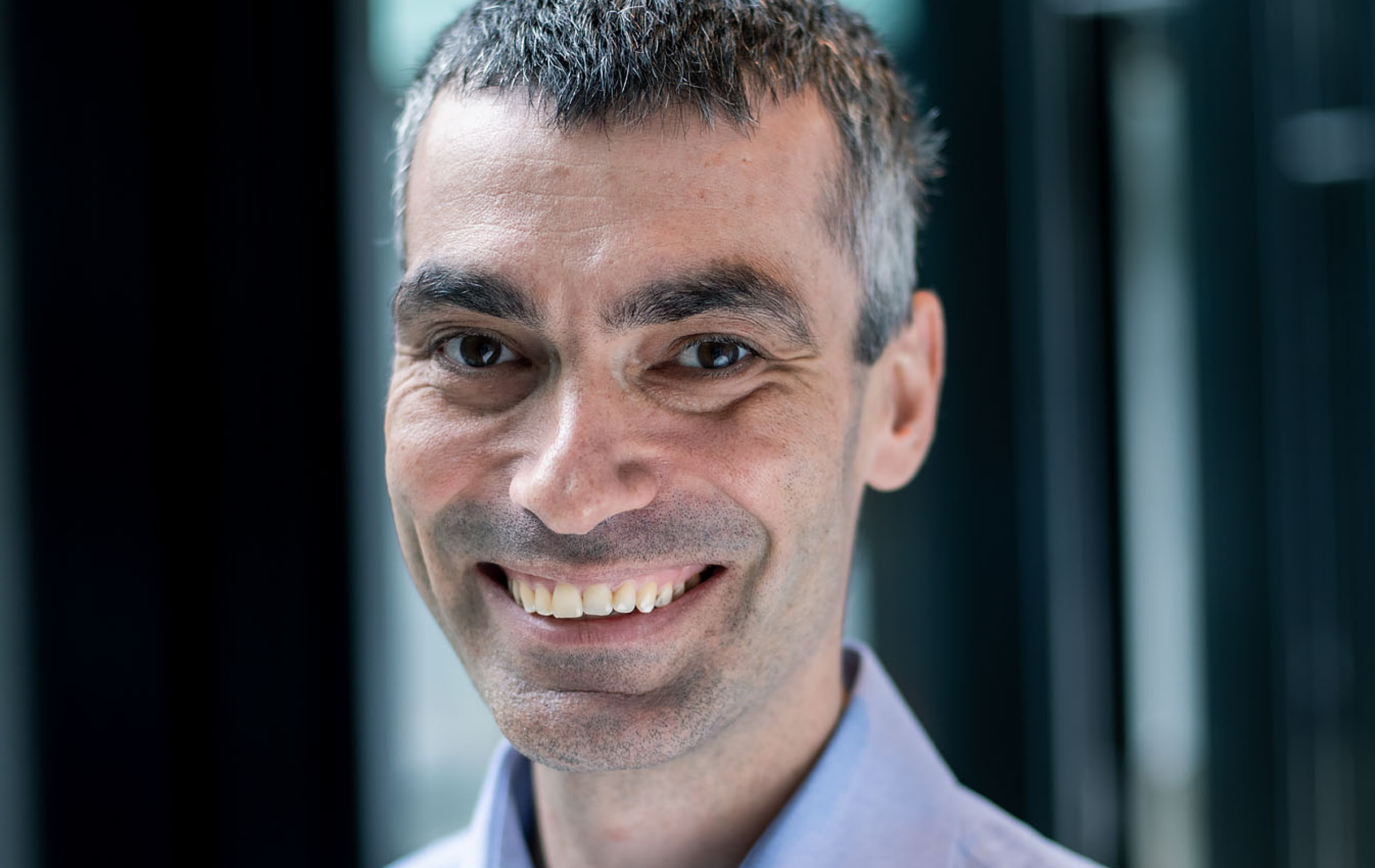
Ondřej Kuhn didn’t take the most direct route into customer experience. He started out in documentary film, then spent seven years at the agency Refresh leading digital projects for brands such as UPC and HBO. Later, at TV Nova, he headed the CRM team for the streaming platform Voyo, where he was responsible for customer data across several European markets. Today he oversees digital activities for OKTAGON MMA and, as an independent CRM/CDP consultant, helps companies such as Bonami and Invia understand their own customers better. We’re all the more delighted that he found time to talk to us.
Ondra, when did you first realise that the viewer interested you more than the film itself?
Thinking about it, there wasn’t a specific turning point. From the very start, I was perhaps more interested in the viewer than in the film. To understand how a film works, you first need to understand the person watching it: their psychology, expectations, experiences and the way they process content. But that’s not all. You also need to understand and manage the interaction before and after the film itself, which goes well beyond two hours in front of a screen.
The renowned Dutch documentary festival IDFA once used the line “The end of documentary is not the end of story.” That sums up what interested me: a film opens up topics, sparks discussion and can motivate people to take further action. The viewer becomes a participant in a wider process, before, during and after the film. Looking back, the move into customer experience feels natural. Later, when I was working around documentary film, this interest only deepened.
On top of that, like any self-respecting boy growing up in the 90s, I spent a huge amount of time playing computer games, especially resource-management strategy games. I was always drawn to interactive media and fascinated by what was happening on the other side, and why. Not just whether people were enjoying themselves, but how they responded to the content, how they influenced it themselves, what resonated with them and what they took away from the experience. These were specific forms of UX and CX, and even as a player or viewer I was actively thinking about my experience and its practical side.
Do you silently judge every email companies send you?
It’s definitely an occupational hazard. But I don’t look at communication primarily through the lens of its technical or visual execution. I’m far more interested in why I actually received it.
Companies often overestimate personalisation and underestimate relevance and timing. Addressing someone by name or making an offer that matches their profile doesn’t mean the message is useful. What really matters is the right timing, frequency and channel. A perfectly personalised offer at the wrong moment can backfire.
So yes, I do judge emails. But rather than thinking about the subject line or the automation, I ask myself whether anyone genuinely considered what I need as a customer at that moment.
We met at the Anatomie CX conference, recently held in Prague. Which idea from the other speakers stuck with you most?
I was particularly struck by the size of Air Bank’s CRM team and how it operates. If I remember correctly, we were talking about around thirty people. What fascinates me most is how seriously Air Bank takes this field and how much human capital it’s willing to invest in orchestrating the customer experience.
At the same time, a team that size raises questions for me. At a time when we can automate, replicate and optimise a vast number of processes, I wonder how necessary that much human capacity really is. And above all, how do you maintain a consistent customer experience across such a large team?
From my experience at telecoms companies and banks, I know how easily customer communication can fall apart between teams, responsibilities and internal priorities. Everyone optimises their own part, but the customer sees the brand as a single whole. I don’t mean this as criticism of Air Bank. It’s great to see a company that gives CRM and CX so much weight. But we should also think about technology, automation and customer experience management as one connected whole.
Which round is the hardest when piecing together a single customer identity?
For me, it’s the very first round. Not necessarily because it’s the most technically complex, but because it usually reveals far more than the company originally imagined.
You have to get to grips with what data the company collects, where it sits, how it fits together and what can realistically be used. You often find it isn’t as complete, consistent or accessible as you assumed. Some information is missing, some was never collected in the first place, and some has been overwritten or deleted. Then there’s the question of consent and the lawful use of data. It’s painstaking work, full of unpleasant surprises.
But companies often come unstuck only once their data is connected and they start working on personalisation. They aim for maximum segment granularity but forget about the relevance, timing and frequency of their communication. Knowing your customer perfectly doesn’t mean you know how to communicate with them well.
What have the people who leave taught you?
Probably the simplest thing, which companies surprisingly often fail to do: just ask.
A departing customer is a huge source of information, not only about why they cancelled their subscription, but also about the product, pricing, communication or support. And getting that information can cost practically nothing. You just need to give the customer the chance to share it.
Companies still haven’t learnt to work with feedback systematically and continuously. A one-off survey isn’t enough; you need to track how the reasons change over time and feed the results into decisions. Thanks to AI, we can now analyse open-ended answers in customers’ own words far better, not just predefined options.
And we shouldn’t only be asking those who leave. It’s just as important to listen to the satisfied and dissatisfied customers who stay. There’s no single universal reason for leaving, and no single universal truth about customer experience.
What do you see differently from the other side of the table than you did in-house?
Years ago I spent quite a long time agency-side, so I know the environment well from both sides of the table. That combination of experience is essential in consulting work today.
As an external consultant, you have one big advantage. At the start you’re often given much more trust, and it’s easier to get a seat at the table with senior leadership. You’re not weighed down by internal history, company politics or established processes. Nobody expects you to accept all the reasons why something hasn’t been possible for the last ten years. You can challenge things nobody internally questions any more.
On the other hand, there’s much more pressure on you to deliver results. You have to turn that initial trust into tangible value quickly. A presentation or a technically elegant proposal isn’t enough: the solution has to work.
Across companies, I often see a shortage of development and engineering capacity. Product and development teams are swamped with priorities, and every integration, data request or automation sits in an endless queue. This is a huge opportunity for a CDP. If we connect it to existing infrastructure quickly and properly, we can move a large share of the work on data, segmentation and communication orchestration out of the clogged product and development pipeline.
That doesn’t mean we’ll stop needing developers. But we won’t depend on them for every change to a segment or customer journey. And removing obstacles like these is one of the most valuable things I can bring as a consultant.
Where’s the line between pleasant and creepy personalisation?
It depends on who is personalising and whether I consciously opted into personalisation by handing over my data. An unexpectedly personal message from a bank or an overly familiar call from a call centre can undermine a brand. Then there’s the degree and relevance of the communication itself, and above all the ability to control it or opt out altogether.
We often focus on how best to get to know and segment the customer, but think less about whether they even want to hear from us at that moment. For me, one of the most valuable signals is someone unsubscribing from a newsletter. I don’t see it as a failure. That person has just interacted with me and clearly stated their preference: “This doesn’t interest me, thanks, I don’t want to carry on.” And I should respect that.
From a database-quality perspective, an active unsubscribe is worth more than a passive contact who stays but shows no interest over the long term. For me, the limit of personalisation lies above all in respecting the fact that ours is still a business relationship. A friend wouldn’t suddenly start offering you insurance out of the blue.
When has a recommendation algorithm hit the mark, and when has it annoyed you?
There’s one paradox about recommendation algorithms that has interested me for a long time. The more information we have about a user, the more we assume we can predict exactly what they’ll want next.
But human behaviour isn’t that simple. It doesn’t want to be boxed in. Just because I watched a documentary yesterday doesn’t mean I want another one today. And a long-term interest in a subject doesn’t mean I want to consume it in every situation.
So when working with recommendation systems, I always felt it was important to consider not only the user’s historical preferences but also their current context. A good algorithm offers me something interesting without locking me into an ever-narrower circle of predictable recommendations.
Is there room for humour in customer communication?
Humour definitely has its place in customer communication. It’s nice to see a brand or company that doesn’t take itself too seriously. But, as with personalisation, context and degree are what matter most.
It can humanise a brand, set it apart and create a more natural relationship. At the wrong moment, though, it has the opposite effect and feels forced. A customer dealing with a complaint or an unpleasant situation probably doesn’t want jokes; they expect understanding and a solution.
Companies sometimes focus too much on how they say something and forget why they’re saying it and what situation the customer is in. Humour should therefore come naturally from the brand’s personality, its relationship with the customer and the specific moment.
What advice would you give to someone who wants to move into customer data and CX from another field?
Above all, I’d tell them not to be put off by not having a technical or analytical background.
Although I came from documentary film and streaming, even back then 99% of the work was really about user experience within a much wider digital context: interacting with a website or app, the purchasing process, managing a subscription, giving feedback, and the discussions and engagement with the content that followed. The film itself was really just one part of the whole experience. And it’s precisely the sum of all these interactions and touchpoints that shapes the customer experience, or CX.
The key is being able to step back and look at your own business from above. Picture a time-lapse of people moving through a station concourse, or spring meltwater finding its way across a landscape. Up close, you see individual people, steps and decisions. Only from above do you start to recognise the patterns, the natural routes, the obstacles and the places where movement becomes needlessly complicated. And that’s exactly how we should look at customer experience: not as a set of isolated interactions, but as one connected, constantly evolving whole.
Working with customer data isn’t just about technology, databases and analytics. Above all, it’s about understanding human behaviour, asking the right questions and making connections. Technologies are tools; what matters is knowing what problem you’re solving and why. People from psychology, sociology, design, film or journalism can bring valuable perspectives.
And if I had to give one practical piece of advice, it would be this: learn to listen and to ask. CX and UX are interactive fields where general truths don’t hold for long. Ask your users for feedback on everything you do.
What customer experience has delighted you recently, so much so that you told your family about it?
This may surprise you, but it was buying timber for a structure I’m building in my garden.
And it wasn’t because everything went perfectly. I had several specific requirements, we had to deal with delivery complications and even one product that never arrived. It certainly wasn’t a completely smooth purchase.
What pleased me was how well the whole company worked across every touchpoint. I communicated via the website and with customer service staff, dispatchers and drivers. Even though several people were involved, I felt that everyone knew what was going on and that we were all working towards the same goal.
The communication was clear, each step followed on logically from the last, and we resolved the complications without ever losing the thread. Both sides wanted to help each other: the staff looked for solutions for me, and I tried to work with what they could offer. A win-win.
A good customer experience doesn’t have to mean a flawless process. Mistakes will always happen. What matters is how the company responds and whether it can guide the customer through the situation in a meaningful way. Despite the problems, I came away from that purchase feeling genuinely good, and perhaps that’s exactly why I remember it more than dozens of trouble-free purchases. To finish on a fighting note: no pain, no gain :)