Share article

Jan Egem has worked in marketing and customer relationships for more than 25 years. He has worked at advertising agencies and led CRM and loyalty programmes for dozens of clients, both in the Czech Republic and internationally, including Microsoft and Shell. Today he heads up CRM at Air Bank. At the October conference Anatomie zákaznické zkušenosti (Anatomy of Customer Experience), he spoke about how to make “tailored” offers genuinely helpful rather than irritating. It was clear he still loves what he does. So we asked him what has changed in customer relationships over the years, what has stayed the same, and which buzzwords he has outlived.
Jan, you joined the industry in 2001 at the Wunderman agency. Comparing customer relationships back then with today, what has changed the most? And is there anything that has stayed exactly the same?
The biggest change is speed and the sheer range of options. When I joined Wunderman in 2001, much of our customer communication happened through email, phone and other channels. Preparing a campaign had a different rhythm. Today we can respond to specific behaviour instantly, we have far more data and we can automate a great deal.
At the same time, the responsibility has grown. When you can message a customer at any moment, you have to be much more careful about when you actually do. Just because you can contact a customer doesn’t mean you should.
What hasn’t changed is the very foundation of CRM: building a relationship with the customer. And that relationship has to benefit both sides. Even back then I came across companies that saw CRM as just another communication channel, and I still see it today. The company wants the customer to do something, but it isn’t very interested in what the customer thinks about it, why they should do it, or what the company could do for them in return.
If we want to build a long-term relationship, we need to listen to customers and give them value, just as we expect them to bring value to us. That principle holds true no matter how fast or clever our technology becomes.
You spent most of your career at agencies, mainly Wunderman, before moving client-side. What was it like suddenly sitting on the other side of the table? Did you have to admit you’d seen some things differently from the agency?
My perspective changed. An agency has the big advantage of seeing different companies, industries and approaches. It can bring fresh inspiration and ask the questions that people inside a business have stopped asking. Client-side, on the other hand, you see far more of the bigger picture, and you’re responsible for making sure a solution works in the long run.
If I had to name one thing I genuinely had to rethink, it would be ownership: taking responsibility for the whole thing. At the agency, I felt I was a significant part of the solution we proposed and I took its results personally. But it was only at Air Bank that I discovered how far that responsibility can stretch when you really want something to work.
Only here can I cover everything from start to finish. From defining the problem, through design and delivery, to day-to-day running, evaluation and further development. I can shape the entire outcome and I’m accountable for it too. That breadth wasn’t visible from the agency, and I couldn’t fully experience it there. For me, that’s the fundamental difference between the two roles.
For several years you ran CRM and loyalty programmes for Shell. How do you see customer loyalty today? Are people really loyal to a brand, or more to points and discounts?
I’d say customers are, above all, loyal to themselves. To their own needs, values and emotions. A brand, points and discounts matter to them only as far as they meet those needs.
Some people choose a brand because they feel close to it and identify with what it stands for. Others value convenience, reliability or a good price. And for some, it really is the points and rewards. There’s always some kind of value behind it for that particular person.
That’s why I’d ask less whether a customer is loyal to our brand or to our programme, and more why they keep choosing us. What do we give them, and does the value we offer actually matter to them? I see loyalty as the result of it making sense for the customer to stay with us over the long term.
I came across an older interview you gave to the Prague University of Economics and Business magazine, roughly twelve years ago. You talked about connecting customer data and how it could be used in restaurants, airports or cinemas, for example. Looking back, did that come true, or did things go in a completely different direction?
I’m still convinced that connecting data is hugely valuable for both the company and the customer. It allows us to predict much more accurately what a customer really needs and to offer a solution that fits their current life situation.
Individual pieces of data only tell part of the story. Only when we connect them can we properly understand what’s going on with a customer right now. Perhaps they’ve already sorted something out, their needs have changed, or something different would help them at that moment than we originally assumed. If data stays siloed, our communication can easily end up based on an incomplete or outdated picture of the customer.
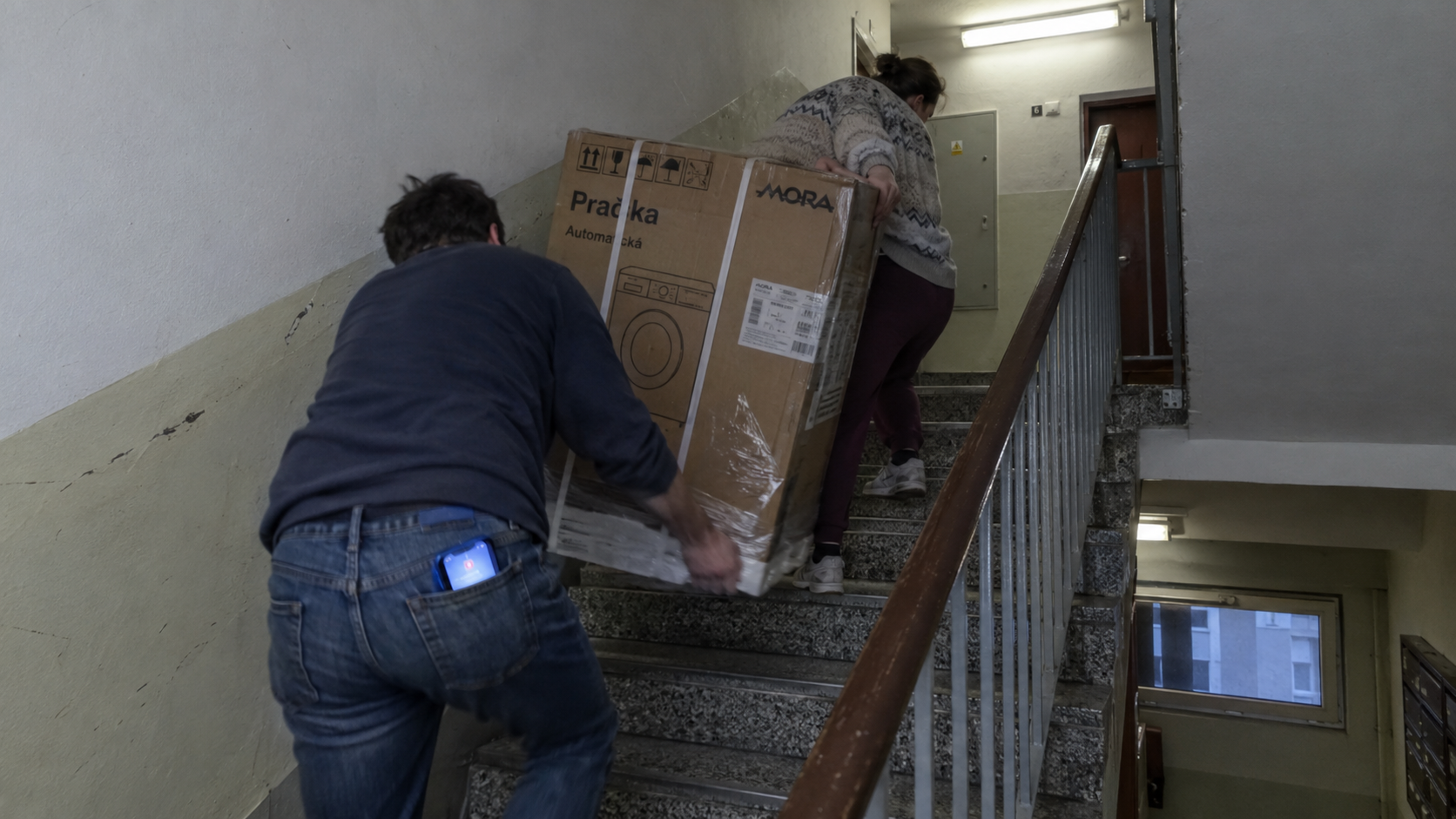
At the Anatomie zákaznické zkušenosti conference, you spoke about Next Best Offer. Most of us have bought a washing machine and then received offers for another washing machine for weeks. Why does this still happen so often? And can you think of a situation where the best offer for the customer is actually no offer at all?
You’re right, unfortunately it happens all the time, and it ties directly into the previous question. It’s probably an occupational hazard, but this kind of communication annoys me every single time. Linking purchase information to the campaign you’re sending a customer really isn’t difficult. It takes very little for a company to factor in what it already knows about the customer and to think about them in context.
Among other things, a certain drugstore chain, which shall remain nameless, occasionally sends me offers on women’s sanitary products. Just like the washing machine, I see it as a lack of respect for me as a customer. The company wants my attention but doesn’t pay enough attention to what I need. And in doing so, it shows me how much it values our relationship.
So when is the best offer no offer? Exactly in cases like that. If I have nothing that could help a customer now or in the near future, and nothing that matches their current or expected needs, it’s perfectly fine not to contact them with an offer. That’s certainly better than offering me women’s sanitary products. 🙂
We all know those messages that pose as customer care but are really sales pitches in a nicer wrapper. Where do you draw the line between a company looking after its customers and simply trying to sell them something? Can you tell the difference when you’re the customer?
Sales communication doesn’t bother me in itself. What bothers me is any communication that isn’t relevant to me as a customer, whether it’s a product offer or a message the company calls “care”.
So I see the line in how you approach the customer. Do we understand their situation? Does our message have any value for them? Is it arriving at the right moment? If so, even a sales offer can be welcome. Equally, a message dressed up as care can be a nuisance if it brings the customer nothing useful.
You have experience in CRM, data and research, which is a combination not everyone has. What happens when these areas within a company don’t really talk to each other?
Each of these areas sees only part of the customer’s story. Bringing them together is hugely valuable for a business. At Air Bank, we went as far as making the research team part of the department I lead, alongside the CRM team. We did it precisely to encourage communication between them and to bring their different perspectives together.
Transactional data shows us what customers actually do and how they use our services. Research adds their needs, motivations and experiences, as well as the wider market context. At the same time, we can place research insights within real customer behaviour, which research alone can’t capture in that level of detail.
I can’t not ask about AI. Where does it genuinely help you in CRM, and where is it still more of a nice conference slide?
AI lets us think about a far higher level of relevance in our communication with customers, something we simply didn’t have the capacity to imagine before. It will help us dramatically multiply the number of communication scenarios and variants we can prepare and deliver. That certainly doesn’t mean we should message customers more. I’m talking about hyper-relevance: being able to communicate with each customer individually and respond more precisely to specific signals in the data or in their behaviour.
Today, AI helps us with every piece of communication. It doesn’t yet cover the entire campaign process from start to finish, but I believe that will be possible next year. Step by step, it’s freeing us from routine execution work and giving us room to form hypotheses, understand the customer’s context and work out what will genuinely help them.
It was clear from your talk that you still love your work. After all these years, what still excites you about it?
I try to find balance in the relationship between the customer and the company. A kind of win-win, where both sides benefit. In my case, that means helping customers with their finances or everyday banking and offering them something of real value in their situation. The customer takes up the offer because it makes sense to them, and the bank earns from it too.
CRM allows us to scale that win-win. We can reach hundreds of thousands or millions of customers while still aiming for the communication to make sense to each one of them. When you manage to get close to that balance at scale, the impact is enormous, for customers and for the company alike. That’s what I find most fulfilling and enjoyable about my work.
And finally, something practical. Imagine a small local online shop with a few thousand customers, no data team and a small budget. Where should it start if it wants to look after its customers better?
Whether you’re a small online shop, a large one or any other kind of business, I’d start by answering one question honestly: why are you doing all this? I mean the real Why. I see many companies that have clearly defined what they do and how they do it, but the Why has got lost along the way. Yet that answer gives you direction and helps you shape your vision. It’s a compass you can use for decisions, including in your day-to-day work with customers.
The second thing is that good CRM and good customer relationships don’t depend on expensive, sophisticated technology. I’ve come across large companies that invested millions of euros in CRM and data platforms, yet didn’t use their potential and still lacked a customer-centric approach. At the same time, I know from experience that you can build a solid foundation for customer relationships with nothing more than Excel or Outlook. What really matters is how you think about your relationship with the customer.