
Share article
Survey timing decides two things at once: how many people respond, and whether their answers describe what you actually set out to measure. So how do you set it up to get data you can genuinely use?
A customer orders a washing machine on Friday evening. On Saturday morning, an email lands in their inbox: “How satisfied were you with your purchase?” What exactly are they supposed to rate? The washing machine is still sitting in a warehouse. They clicked a button and got a confirmation. They’ll give it an eight, or delete the email.
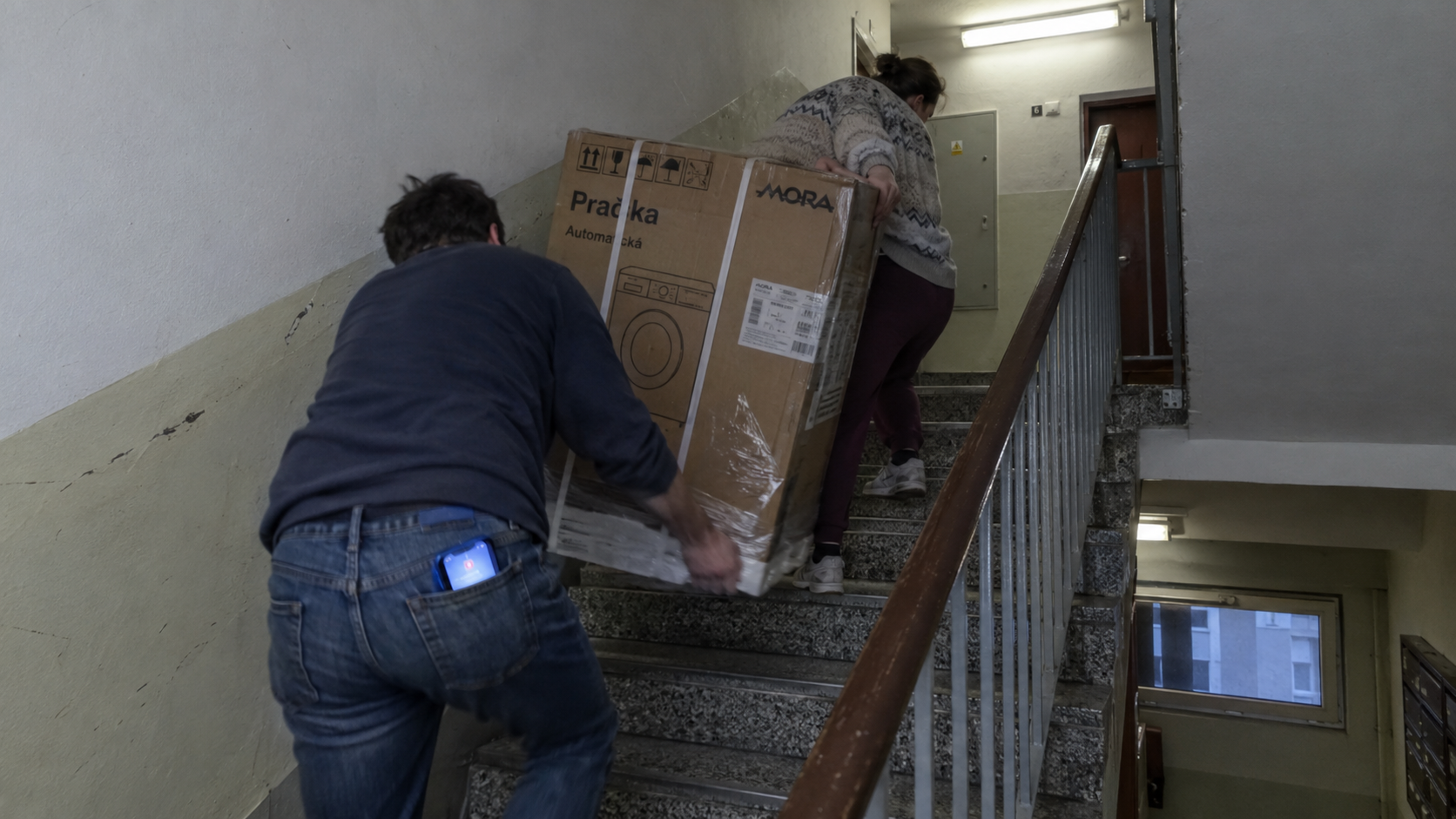
Ten days later, the washing machine arrives. The courier leaves it on the ground floor instead of taking it up to the third, and there’s no way to arrange installation. This is the experience the customer will be telling everyone about over Sunday lunch. But by then, nobody is asking them anything. The survey has gone out, the data is in the report and the chart is glowing green.
There was nothing wrong with the question. The problem was the timing.
In CX (customer experience), there’s plenty of discussion about what to ask and how long a questionnaire should be. There’s far less about when to ask. That’s a shame, because a badly timed survey either gives you no data at all or, worse, gives you data that looks fine but measures something other than what you think.
Why it pays to ask straight away
First, let’s get the terms straight. You send a transactional survey because of a specific event: a purchase, a delivery, a support call. A relationship survey asks about the customer’s whole relationship with the brand and goes out on a schedule, say once a quarter. When we talk about timing here, we mainly mean the former.
Transactional surveys sent straight after an interaction get the highest response rates, for three simple reasons.
The customer knows what you’re talking about. The experience is still fresh in their mind, so they don’t have to dredge anything up. Benchmarks from the major survey platforms are clear on this: a transactional survey should go out within 24 to 48 hours. A customer you helped three weeks ago will struggle to recall the experience and won’t feel like revisiting it. For customer feedback surveys, the average response rate on one of the largest platforms sits at around 32%, and two factors influence it most reliably: timing and length.
Attention fades fast. To the customer, a survey invitation is just another email or text message, and those have a short shelf life. One analysis of email communication found that the vast majority of opens happen within the first few hours of sending, and after 24 hours only a negligible fraction get opened at all. So when the survey arrives while the customer is still “in the moment”, it’s competing with far fewer distractions.
It changes who actually responds. This is the point most often overlooked. One study compared patients who rated their care immediately after treatment with those of them who answered the same survey one and two years later. After two years, the people who responded and the people who no longer did differed significantly in their original satisfaction. The longer you wait, the more your sample “drifts”, and you end up measuring a different group of people from the one you intended.
What the customer experienced and what they remember
There’s one more thing anyone who sets up surveys should know. People don’t remember an experience as the sum of all its moments. They mainly remember the most intense moment and the end. Psychologists call this the peak-end rule.
The best-known experiment involved colonoscopy patients. One group had a few extra minutes of milder discomfort added at the end of the procedure, and they remembered the whole thing as less painful, even though, objectively, they suffered for longer. They were also more willing to come back for another examination.
What does this mean for surveys? Ask straight away and you’re mostly measuring how the customer experienced it. Ask later and you’re measuring how they remember it. Both are useful, but they’re not the same thing. To fix a process, you need the first. To predict whether a customer will come back and recommend you, the second is often more valuable. Asking late isn’t the mistake. The mistake is not knowing what you’re measuring.
Ask at the end of a step, not in the middle
A customer journey isn’t one big experience. It’s a series of smaller steps, each with its own beginning and end. A rule that works almost every time: ask at the moment a step has been completed. Not earlier, because the customer has nothing to rate yet. And not much later, because by then they’ve moved on to something else.
In practice, it looks like this:
| Journey stage | Event that triggers the survey | When to ask | What to ask about |
|---|---|---|---|
| Online purchase | Order completed | Immediately on the thank-you page or within an hour | How easy it was to order (CES) |
| Delivery | Parcel marked as delivered | Within hours of delivery | How the delivery went, condition of the goods |
| Product use | Time elapsed since delivery or activation | Only after the first real use, typically days to weeks | Satisfaction with the product (CSAT) |
| Customer support | Ticket closed | Chat and simple queries straight away, technical issues after a delay | Whether the problem was solved, effort |
| Onboarding | First key step completed | After that step, not after sign-up | What was unclear |
| Overall relationship | A calendar date, not an event | Regularly, e.g. quarterly | Likelihood to recommend the brand (NPS) |
The abbreviations in the table are the three most common metrics. CES (Customer Effort Score) measures how much effort something took the customer. CSAT (Customer Satisfaction Score) measures satisfaction with a specific thing. NPS (Net Promoter Score) asks how likely the customer is to recommend the brand.
Notice that each stage has a different metric. That’s no coincidence. CES makes sense straight after a process, because people only remember effort accurately for a short while. NPS straight after a single support call, on the other hand, doesn’t make much sense: you’re asking about the whole relationship, but the customer answers based on the last ten minutes.
When you survey on a schedule
With relationship surveys, the hour doesn’t matter much, but the day of the week does. One large analysis of roughly 100,000 surveys found that those sent on a Monday got about 10% more responses than average, while those sent on a Friday got about 13% fewer. On mobile, though, people are more willing to respond at the weekend than on a computer. If your customers mostly read their email on their phones, the weekend may not be a mistake. But don’t blindly trust any “best day”. The only way to find yours is to split your list randomly and test two variants against each other.
What about employees?
The same logic applies to EX (employee experience). There’s no point sending an onboarding survey on someone’s first day, when the new colleague is still working out where the kitchen is. The meaningful moments are the end of the probation period, the first performance review or leaving the company. The same principle applies as with customers: ask once the step is complete.
Quick, but not hasty
“Ask as soon as possible” is good advice, until someone takes it literally. That’s how you end up with the washing machine from the start of this article. Timing can go wrong in two ways, not one.
Too early. The customer has nothing to rate, so they rate something else instead. Usually their expectations, the brand or how they happen to be feeling. Answers like that look like data, but they’re mostly noise. The tricky part is that they tend to be positive, because nothing has had a chance to spoil the impression yet.
Too late. The experience blurs into others, the customer rewrites it based on how it ended, and the only people who respond are those with a strong reason to. Either delighted or furious.
The right moment lies somewhere in between. Exactly where depends on what you’re measuring. For support, you can send the survey as soon as the chat ends or the ticket is closed. For purchases, bear in mind that the customer needs to receive the goods, unpack them and try them out, so the survey may need to wait hours or even days.
A closed ticket doesn’t mean a solved problem
This is where most mistakes happen. The system sends a survey the moment an agent clicks “Resolved”. But that’s a status in the system, not in the customer’s head. For a query like “when will my invoice arrive”, the two are the same. For an internet connection that isn’t working, they’re not. The customer doesn’t yet know whether the fix will hold until the evening.
The practical solution: distinguish between types of request. Measure simple queries and chat immediately, because you’re mainly assessing how the agent handled things. Measure technical issues after a delay, typically the next day, and cancel the survey if the ticket has been reopened in the meantime. Otherwise you’ll be sending a satisfaction survey to someone who’s just had to call for the second time.
Two small surveys or one big one?
For longer journeys (purchase, delivery, product use), it’s tempting to split measurement into two short moments: one straight after the process, and one after the customer has had time with the product. This works, but only with a rule that keeps track of how many surveys a customer receives in total. In B2C (selling to consumers), a simple guideline works well: start from how often the customer interacts with you and set the interval between surveys to roughly double that. Someone who buys once a month shouldn’t get a survey after every purchase. We looked at what happens when this rule is missing in our article Why Customers Lie in Surveys and What to Do About It.
Don’t leave a survey open forever
This one gets forgotten entirely. A transactional survey shouldn’t stay open indefinitely. Close it within a few days, because responses collected long after the interaction lose accuracy. If someone fills in a delivery rating six weeks later, they’re not rating the delivery. They’re rating how they feel about your shop right now.
So how do you know your timing is right? Test it. Send the survey to half your customers straight away and to the other half after a delay. Don’t just look at the response rate. Look at the distribution of answers too, and above all at the comments. If the comments on the immediate survey talk about something that hasn’t happened yet, you have your answer.
Let the system take care of timing
Sending surveys manually has one flaw that no amount of training can fix: every week they go out at a different time. One week it’s a day after delivery, the next it’s five days, because a colleague was on holiday. The data can’t be compared, because each time you’re measuring a different moment. Automation keeps the timing consistent across every interaction. Only then do you have data you can compare across weeks and branches.
The answer is to trigger surveys from events in your CRM (Customer Relationship Management system), e-shop or ticketing system. It sounds simple. It isn’t. A working rule has six parts:
- The right event. Choose the one that means the step is actually finished. “Delivered”, not “dispatched”. “Resolved and not reopened for 24 hours”, not “closed”.
- Exclusion rules. Don’t send a survey if the customer has an open complaint, if the ticket has been reopened, if the order was cancelled or if the customer has opted out of communication. This is where trust is most often lost.
- Delay by type. Different events need different delays; see the table above. A single universal delay for everything is convenient and almost always wrong.
- Frequency rules. The system needs to know when the customer last received a survey, across all channels and teams. Most professional platforms have dedicated settings for this. A good starting point: a general rule of at least 15 days between any messages, plus a “quarantine” period of 30, 90 or 120 days depending on the type of survey.
- Channel and send time. According to benchmarks from one of the big platforms, SMS surveys have an average response rate of around 19%, in-app surveys around 34%, and emails sent to a company’s own opted-in customers around 49%. These are averages, not laws. But one thing holds true across the board: SMS works best with one to three questions, sent shortly after the interaction. And nobody wants a satisfaction text at 11:40 pm. Send in the customer’s local time.
- The way back. The response must flow back to the customer’s record in the CRM, and a low score must create a task for a specific person. This is known as closing the loop. When people see that their feedback led to something, they’re more willing to respond next time. So timing doesn’t just affect this survey, it affects the next one too.
What to watch out for
Automation is only as good as the data it runs on. If agents close tickets in bulk at the end of their shift, your “instant” survey goes out several hours late and nobody notices. If the courier marks a parcel as delivered before the customer actually has it, you’re asking about something that hasn’t happened yet.
So run a simple check every now and then. Pull a sample of sent surveys and compare the time of the actual interaction with the time the survey went out. And send a survey to yourself. As a customer. You’ll spot most of the problems within the first five minutes.
What to take to Monday’s meeting
Timing isn’t a technical detail for IT to sort out. It’s a decision about what you’re actually measuring. If you want to get started right away, go through these five questions with your team:
- Do we know what moment each survey measures? For every survey, write one sentence: “We ask when…” If you can’t finish it, you have a problem.
- Is the survey triggered by the end of a step, or just by a status change in the system? Go through your triggers and look for “dispatched” instead of “delivered”, and “closed” instead of “resolved”.
- Does the metric fit the moment? CES and CSAT straight after a process; NPS on a regular basis, away from specific interactions.
- How many surveys does a single customer receive per quarter? Count them across every team. The number will probably surprise you.
- Have we ever tested different timing? Split customers randomly into two groups and compare the response rate, the distribution of answers and the comments.
Honestly, what frustrates me most is that companies spend a fortune on surveys, spend weeks fine-tuning the wording of the questions, and then send the questionnaire at a moment when the customer has nothing to say. And then they’re surprised nobody answers. Customers do want to talk. Just not on a Saturday morning about a washing machine they’ve never seen. Ask them while the experience is still fresh in their minds, and you’ll see how much they have to say. Sometimes more than you’d like to hear. And that’s exactly how it should be.
And next time you’re trying to work out why your response rate is falling, don’t start by rewriting the questions. Look at the clock first.